Le bàzure di Triora
Liguria · The Alpine arc
Triora, upper Valle Argentina (province of Imperia), Ligurian Alps; the trial involves Genoa, Albenga and the Congregation of the Holy Office in Rome
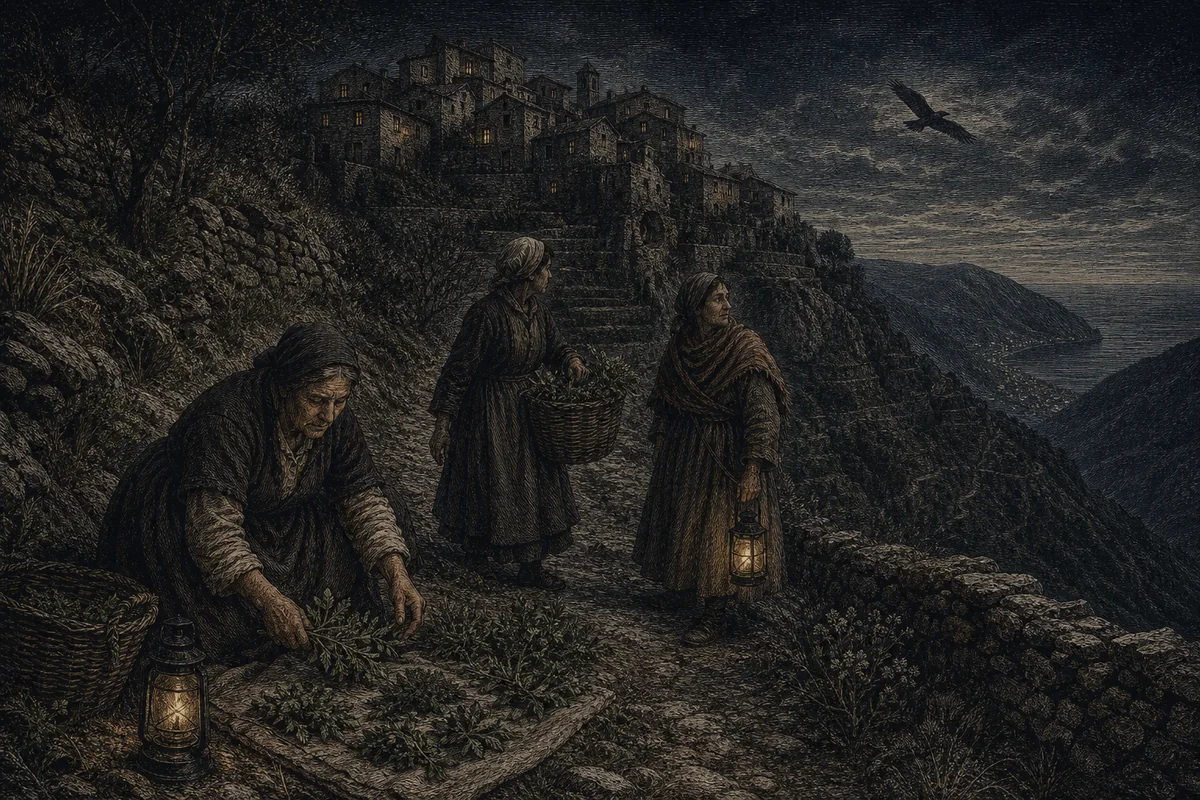
Le bàzure di Triora — between 1587 and 1590, in a village of the upper Valle Argentina struck by years of famine, more than forty women and one man are investigated for witchcraft.
- Variants and dialect names
- bàzura (pl. bàzure), Ligurian word for «witch»; bagiüa in other speech of the valley. In the trial records the accused are called streghe and maliarde.
- What is told
- Between 1587 and 1590, in a village of the upper Valle Argentina struck by years of famine, more than forty women and one man are investigated for witchcraft. The charges are the usual ones: night gatherings at the Cabotina, the quarter outside the walls; children made to sicken and die; harvests lost. The proceedings begin locally, with the podestà Stefano Carrega and the vicar of the bishop of Albenga Gerolamo Dal Pozzo, and soon get out of hand: Isotta Stella, sixty years old, dies of the torments inflicted on her; a woman falls from a window; Pierina di Badalucco and Gentile da Castelvittorio are executed.
- What it was forthe author’s reading
- The Triora hunt is the Italian case in which the economic and social mechanism beneath the accusation of witchcraft can best be seen: it comes after the famine, not before. When the harvest fails for several years in a row, and the village has to explain to itself why this should have happened to it, the accusation identifies a culprit within, and identifies her among the poor women, widowed or alone, who live at the margins of the settlement. The Cabotina is not a magical place: it is where those who had nothing lived.
- Where it is attested
- Records preserved and published in La causa delle streghe di Triora. I documenti dei processi, 1587-1618, 2014. Documented stages: January 1588, appeal by the Consiglio degli Anziani of Triora to the doge of Genoa to have the proceedings suspended; May 1588, visit of the inquisitor general Alberto Drago; June 1588, arrival of the Genoese commissioner Giulio Scribani; end of September 1588, the records reach the Congregation of the Holy Office in Rome. Sentences between 1589 and 1590. Summary with apparatus in Ereticopedia, Caccia e processo alle streghe di Triora; documentation and reproductions at the Museo etnografico e della stregoneria in Triora.
- Caution
- The witches of Triora were not burnt at the stake, and the vulgate that repeats it finds no support in the records. What the documents show is the opposite of what one expects: it was Rome that stopped the local hunt. Cardinal Giulio Antonio Santoro accused the judges of «inhumanity and cruelty», and the final sentences of 1589-90 were lenient — abjurations with penance and releases. The ascertained deaths are those that occurred during the proceedings, not at their end: Isotta Stella under torture, a fall from a window, two executions. It is the same reversal already seen in the trial of Gostanza da Libbiano, where it was the inquisitor of Florence who had the accused released against the local episcopal vicar. I have not consulted the 2014 edition of the documents directly: until I do, this entry rests on the literature that cites it.
The grade says how well the entry is documented, not how interesting it is. How the grades are assigned.