Linchetto
Tuscany · The Po plain and the northern Apennines
Lucchesia, Versilia, Garfagnana
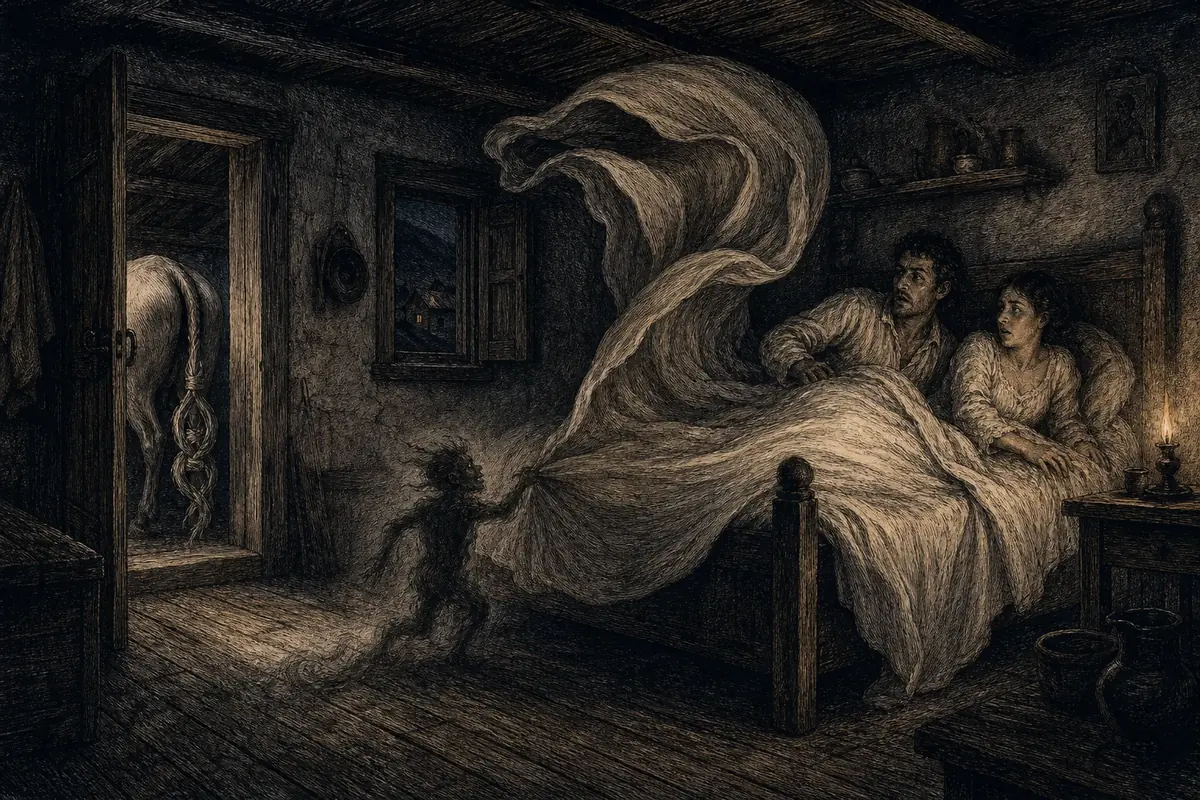
Linchetto — «A spirit not evil but mischievous» which acts at night: it uncovers sleepers, throws the sheets about, beats on the chest, plaits the tails of horses and cows inextricably, knocks at doors.
- Variants and dialect names
- Linchetto; nicknames Caccavecchia, Carcavecchia
- What is told
- «A spirit not evil but mischievous» which acts at night: it uncovers sleepers, throws the sheets about, beats on the chest, plaits the tails of horses and cows inextricably, knocks at doors.
- What it was forthe author’s reading
- It works its mischief above all on wedding nights: it is the cultural explanation of the anxiety and the sexual failure of the first night, externalised into a mischievous agent.
- Where it is attested
- Idelfonso Nieri, Vocabolario lucchese. Giovanni Giannini, collections from the late nineteenth century. Oscar Guidi, fieldwork 1984-1987 in Garfagnana.
- Caution
- The etymology from the Latin incubus, with the chain lincubetto → lincuetto → linchetto, is Nieri's proposal and is to be treated as a hypothesis: it does not appear in the standard etymological dictionaries and it coexists with Del Beccaro's reading, which sees in it a residue of the god Faunus. The latter is in its turn an author's hypothesis, not philology.
The grade says how well the entry is documented, not how interesting it is. How the grades are assigned.