Tarantate
Apulia · Basilicata · The Mezzogiorno
Salento, provinces of Lecce, Brindisi and Taranto; the ritual centre is the chapel of San Paolo at Galatina
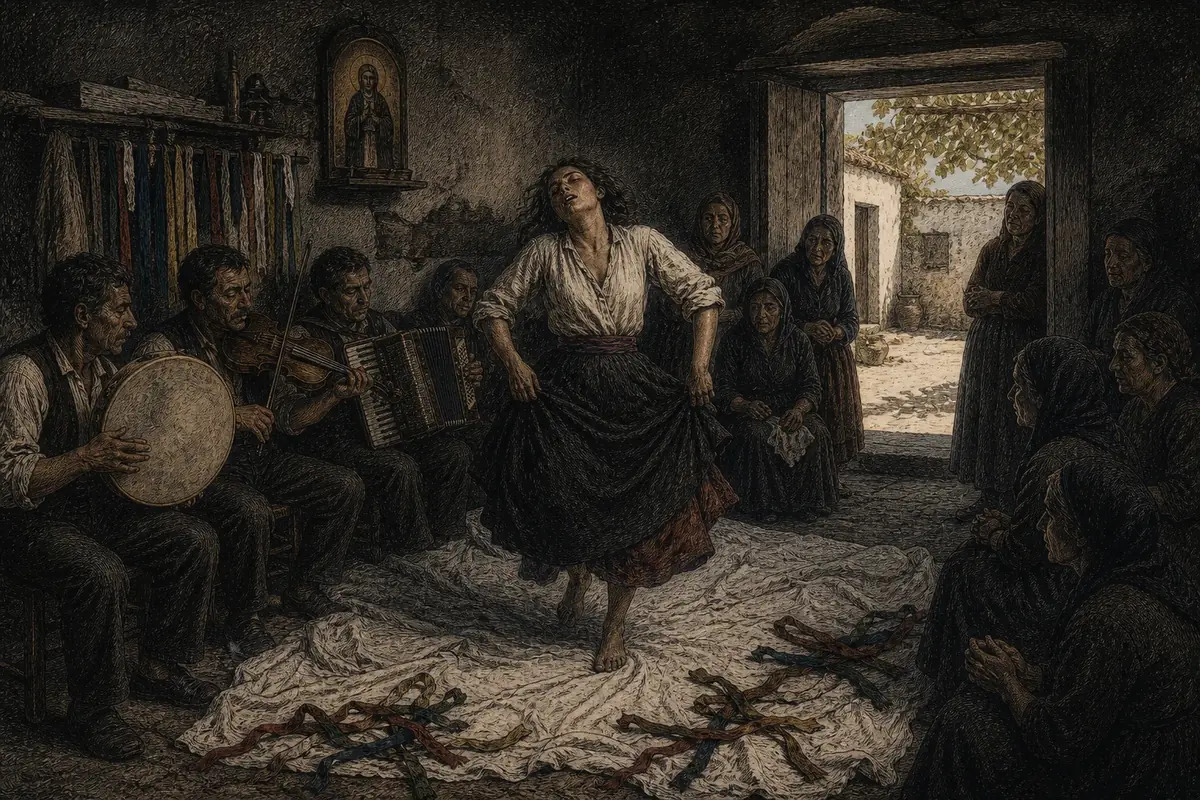
Tarantate — it struck predominantly young unmarried women, with summer crises coinciding with the harvest: prostration, catatonia, delirium, pains.
- Variants and dialect names
- Tarantismo, tarantolismo; le tarantate. The taranta is distinguished as libertine, sad and mute, or tempestuous, each with its own melody
- What is told
- It struck predominantly young unmarried women, with summer crises coinciding with the harvest: prostration, catatonia, delirium, pains. The domestic rite had four moments — musical diagnosis on the white sheet, the chromatic phase with the ribbons, frenzied dance in cycles of fifteen minutes for up to three days, and the pilgrimage to Galatina on 29 June.
- What it was forthe author’s reading
- A cultural institution for giving form, name and public outlet to a female suffering otherwise unsayable in a rigidly codified peasant society.
- Where it is attested
- It is the best documented entry in the atlas. Ernesto de Martino, La terra del rimorso, 1961, the outcome of the interdisciplinary expedition of 1959 in Salento, with ethnographers, physicians and psychiatrists.
- Caution
- Today's concert pizzica descends from the rite but does not continue it: they are two distinct phenomena and are to be kept separate.
The grade says how well the entry is documented, not how interesting it is. How the grades are assigned.